Why AccessPoint 44 / The origin story
I Didn’t Build AccessPoint 44 Because the World Needed Another Accessibility Company.
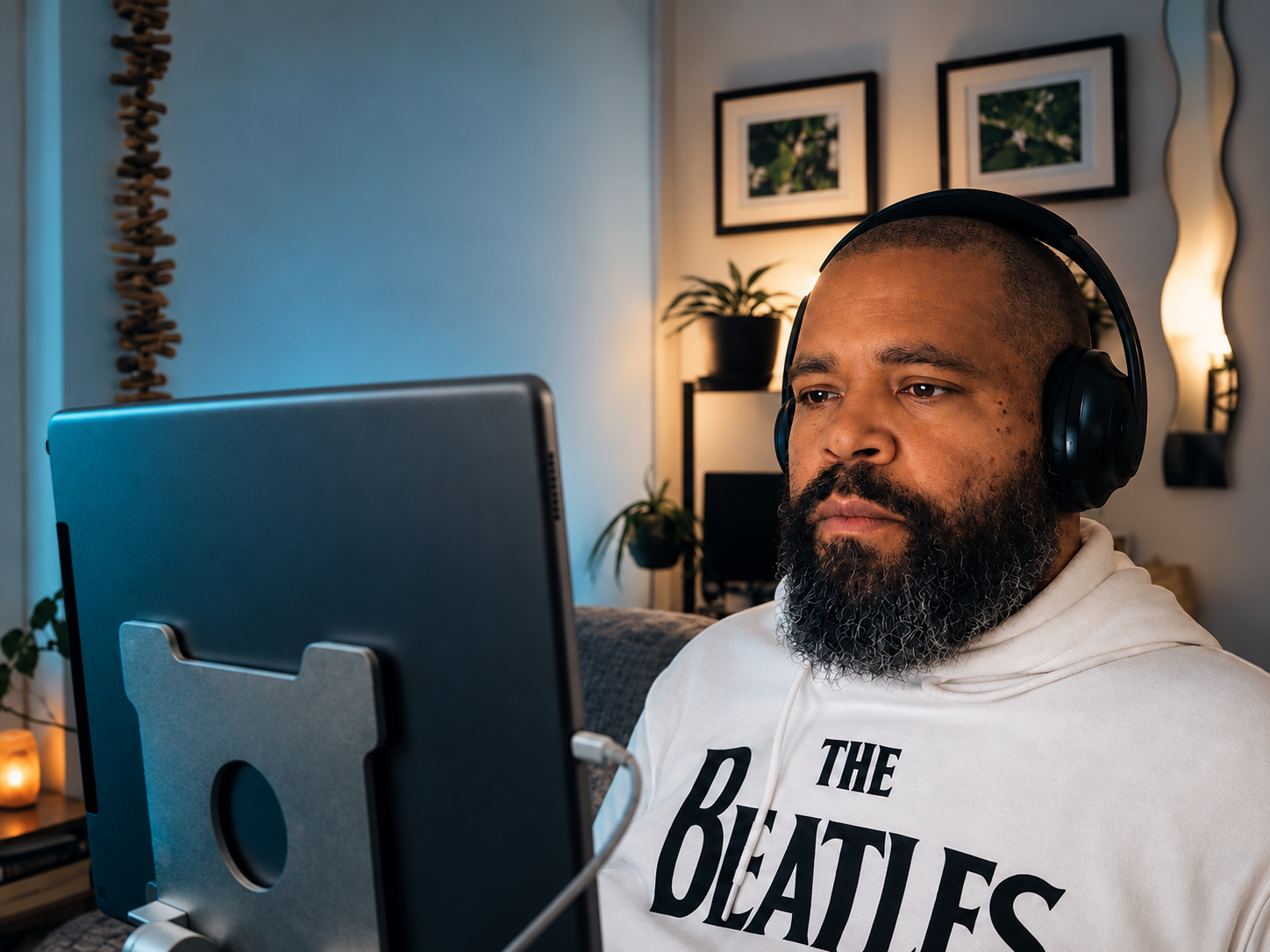
I built it because I had spent most of my life learning what access actually means.
Not the checkbox version.
The real version.
The kind you learn when you enter a room, a building, a piece of technology or an entire system and realize somebody designed the thing without imagining you would ever be there.
I’ve spent decades figuring out what happens next.
Sometimes you adapt.
Sometimes you advocate.
Sometimes you improvise.
And sometimes you decide the damn thing needs to be redesigned.
That’s where AccessPoint 44 comes from.
The Name
Access means entry.
Access to places. Technology. Culture. Opportunity. Information. Life.
I also love the mechanical meaning of an access point: the place where you enter the machine.
Point is where contact happens.
Where an idea touches reality.
And then there’s 44.
The number carries pieces of my history and culture. It represents the decades I’ve spent navigating life from a wheelchair. It’s also a nod to Lewis Hamilton’s 44 and Barack Obama, America’s 44th president and first Black president.
And frankly:
44 just looks cool.
But there is another part of the story.
I Needed a Website.
I knew some HTML.
I also knew I had absolutely no desire to become a web developer.
My aunt taught me something years ago: work hard enough that you can pay people who know how to do the things you don’t know how to do, or simply don’t want to do.
Sound advice.
So I hired people.
There were meetings. Presentations. Landing pages. Services. Features.
Then another feature.
Another upgrade.
Another payment.
It started reminding me of those old photography studios.
You came in for the affordable portrait package.
Then they showed you that photograph.
Well, obviously you need that one.
Then there’s the larger print.
Then the premium package.
And somehow the $29.95 family portrait has developed a mortgage.
Eventually I stopped.
But something had been happening the entire time.
I was watching.
I watched how domains moved.
I watched how accounts connected.
I watched permissions, hosting, platforms and the machinery underneath a website.
And eventually I noticed something more important than what I was spending.
I could own the website and still be dependent on somebody else to operate it.
That bothered me.
Because after a lifetime of thinking about accessibility, I knew there was a difference between access and agency.
Getting through the door isn’t enough if somebody else still controls everything once you’re inside.
So I started learning.
Not because I suddenly wanted to become a programmer.
I still don’t.
But the technology changed.
AI changed.
The tools changed.
And suddenly the question wasn’t:
Who can build this for me?
It became:
What can I build now?
This website is part of the answer.
I designed it.
I learned systems I once assumed would always belong to somebody else.
I made mistakes.
I figured things out.
I asked technology to meet me where I was instead of constantly requiring me to meet it where somebody else thought I should be.
And I’m proud as hell of what came out the other side.
Because that experience taught me something that now sits near the center of AccessPoint 44:
Access without agency isn’t enough.
Accessibility isn’t simply getting somebody through the door.
It’s having choices once you’re inside.
It’s being able to participate.
To create.
To understand.
To control the things that affect your life.
AccessPoint 44 lives at that intersection:
Disability. Technology. Culture. Design. Lived experience.
Sometimes our job is to make an existing system more accessible.
Sometimes it’s to question why the system was designed that way in the first place.
And sometimes you learn enough about the architecture to start changing the building.
That’s AccessPoint 44.
We’re changing the building.